It Was Always the Nervous System
Why athletic development is driven by neural adaptation, not programs. An Olympic Oval, a bobsled team that didn’t bodybuild, and a sentence that took decades to understand.
The Olympic Oval and a “Secret” Gym
For years, I thought the answer lived in the weight room. More volume. Better exercises. Smarter programming.
But standing inside one of the most elite training environments in Canada, I was forced to confront a reality that would take me decades to fully understand: it was never about hypertrophy blocks, fancy lifts, or chasing muscle. It was always about the nervous system.
I still remember standing in the underground training facility at the Olympic Oval beside the University of Calgary. It felt “secret” because, in a way, it was. You needed a scan card just to get through the doors. Another authorization to enter the weight room. And inside, there was nothing flashy about it.
No Instagram lighting. No endless machines. Three Olympic lifting platforms. A handful of squat racks. A dumbbell rack that only stood out if you noticed the 180-lb dumbbells sitting quietly at the end.
What did stand out was the clientele.
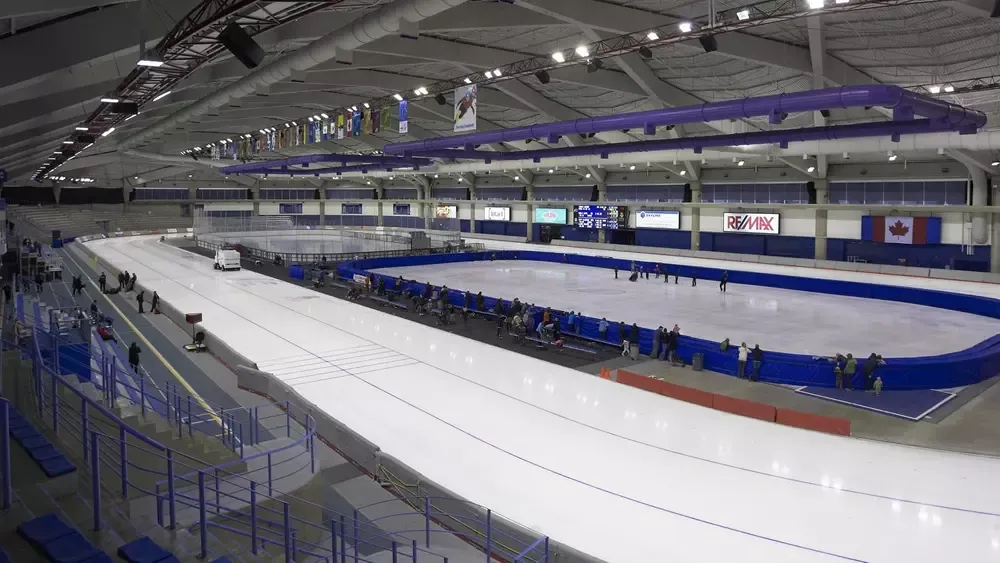
Training in Calgary — especially inside environments like the Olympic Oval — exposes you to a wide spectrum of athletes, from developing youth to those operating at the highest levels of human performance. This gym was regularly occupied by athletes in the top 1% of human physical capability.
At the time, I was competing with the University of Calgary Dinos track and field team, which gave me access to this environment. Whether I belonged in that 1% is debatable (probably not), but I was close enough to observe something that would stick with me.
This was also where I first crossed paths with Stu McMillan.
Learning from People Who Don’t Care If You Like Them
Back then, Stu was not particularly likeable. He was undeniably brilliant — and equally condescending, arrogant, and unapologetically elite. We once got into an altercation during a ball hockey game (I didn’t even know who he was at the time). But in hindsight, that personality trait made him a perfect person to learn from.
He didn’t waste words. He didn’t coach for approval. And when he said something, it mattered.
Today, Stu is far more polished, widely heard on podcasts, and has coached dozens of world champions through ALTIS, one of the most influential performance organizations in the world. But back then, he was also coaching the U.S. Olympic bobsled team — and I often lifted at the same time those athletes trained.
That’s when I noticed something that didn’t make sense.
The Observation That Didn’t Fit the Model
Every bobsledder was jacked. Lean. Explosive. Built like a brick house.
But they didn’t spend much time bodybuilding.
Yes, they squatted. Yes, they cleaned. But most of their training revolved around sprinting and jumping. I don’t remember long hypertrophy blocks. I don’t remember endless accessory work. And yet, their physiques looked like the result of textbook muscle-building programs.
At the same time, I was enrolled in the Olympic Oval Strength & Conditioning Practicum — a small group of undergraduate students being groomed for high-performance coaching. Every Friday, we met to dissect research papers sent by coaches like Matt Jordan, Scott Maw, Stu McMillan, or Jason Poole.
Those meetings were brutal. Imagine a math exam where the only question is the impossible “bonus” question at the end — and then imagine being stared at in silence while you try to answer it. That was every Friday.
The Sentence That Changed Everything
One morning, during one of those long, uncomfortable pauses, Stu broke the tension and asked if anyone had a question.
Against my better judgment, I raised my hand.
I asked whether his bobsledders ever ran dedicated hypertrophy phases — training blocks designed specifically to increase muscle mass.
He looked at me for a long time.
“No, Almon. Their nervous system takes care of that.”
— Stu McMillan, then U.S. Olympic Bobsled Coach (now head of ALTIS)That sentence sat with me for years. And only now, decades later, do I think I truly understand what he meant.
Stimulus, Response, and the Nervous System
After spending a lifetime in sport — as an athlete and a coach — one pattern has become impossible to ignore: the nervous system dictates how the body responds to training.
Yes, DNA sets the boundaries. But the nervous system determines how close an athlete gets to those boundaries.
That athlete who only runs and jumps yet looks like he lives in the weight room? That’s not magic. It’s a nervous system responding aggressively to a stimulus it is exceptionally suited for. Bo Jackson. Alexander Karelin. Mike Tyson at 13.
This isn’t a secret. Strength coaches like Nick Curson and Phil Daru have talked about this openly. The takeaway is simple but uncomfortable: you don’t get to choose how an athlete adapts. Their nervous system does.
Why Early Exposure Changes Everything
Here’s the part most people miss. You can’t change DNA. But you can profoundly influence the nervous system — especially early in life.
The earlier an athlete is exposed to a rich variety of movement stimuli, the more sophisticated their nervous system becomes. Running. Jumping. Skating. Gymnastics. Sprinting. Throwing. Catching. Rolling. Swimming.
As my brother, sport scientist and chiropractor Jeff Almon, often explains, this kind of exposure builds a dense, interconnected neural network — like a spider web with no blind spots. The richer the sensory input, the more refined the motor output.

That’s what early, varied athletic exposure does to the nervous system. It builds density. It builds connections. It builds adaptability.
The Compounding Effect Over Time
This isn’t about creating child prodigies. It’s about raising the ceiling.
Athletes exposed to the right stimuli at the right times don’t just perform better early — they compound advantages over decades. Their movement vocabulary is larger. Their adaptability is higher. Their response to training is more robust.
The difference between two athletes exposed to rich vs. limited environments can be an order of magnitude in long-term athletic and cognitive potential. And once that window closes, you don’t get it back.
If the nervous system drives adaptation, and early exposure shapes the nervous system, then what your athlete does between ages 8 and 14 matters more than what they do at 18. Not because 18 is too late — but because the rate of return is never as high again. The window is open now. The question is whether you use it.
“It was never the program. It was always the nervous system.”
— Greg Almon, Jungle Athletics CalgaryDevelopment System Explained
If this article is your first introduction to Jungle Athletics, the nervous system principles above are one piece of a larger development system. Before booking, most parents find it useful to understand how early exposure, the training approach, and the athlete analysis all connect.
Where Does Your Athlete’s
Nervous System Stand?
Book your athlete’s Free Athlete Analysis. 60 minutes. Our coaches will assess movement quality, coordination, nervous system readiness — and tell you exactly where the gaps are and what to build next.
Book Your Free Athlete Analysis134 71 Ave SE · Calgary, AB T2H 0L9
★★★★★ 228+ Five-Star Google Reviews
Leave a Reply