The Exits Are Known
How to act on what we know about development windows without turning childhood into a checklist. The Maginot Line, the question asked backwards, and four principles that actually work.
The Right Question
I’ve found over time that knowing the answer is rarely the most important thing. The most important thing is asking the right question.
By now, the danger should be clear. If we ignore timing, we waste effort. If we obsess over timing, we risk controlling too much.
The goal isn’t to engineer children. It’s to create environments where the nervous system can’t help but organize itself well.
So the question becomes: if timing determines whether effort works at all, how do we act without over-engineering childhood? How do we plan — without creating a robot?
Asking the Question Backwards
I’ve stolen many good ideas from smarter people than me, and I’m perfectly comfortable doing it again here.
Fitness entrepreneur and coach Pat Rigsby often frames problems in a way I’ve found incredibly useful. He doesn’t ask “What should I do?” He asks: “What shouldn’t I do?”
Not what can I add — but what can I remove until only what matters remains.
Applied to youth development, this reframes the problem entirely.
The question isn’t: “What exercises should my child be doing at each age?”
The question is: “What constraints need to exist so the nervous system can self-organize properly at each stage?”
That distinction matters. Because once you see it, you stop chasing certainty — and start building probability.
Why Rigid Models Fail: The Maginot Line Problem
We do know the exits. We know there are windows where certain qualities — speed, strength, endurance — adapt more efficiently. We know coordination behaves differently. We know early exposure matters. What we don’t know is exactly how that will play out for any individual child.
This is where well-intentioned frameworks often break down.
The Long-Term Athlete Development model (LTAD) was a good idea — at the time. It tried to protect kids from early specialization, burnout, and misuse. That matters. But like the Maginot Line, it was built for a world that no longer exists.

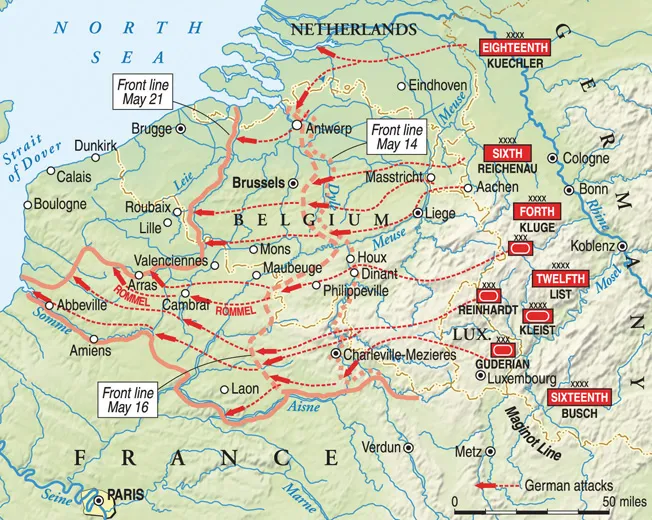
The Maginot Line was France’s answer to World War I: an impenetrable chain of fortresses stretching along the German border. It embodied the old mindset — slow, positional, defensive warfare. In May 1940, Panzer divisions didn’t play by those rules. They drove through terrain planners had dismissed as impassable, flanked the entire line, and overran France in weeks.
LTAD suffers from the same flaw. It assumes predictable timelines, linear progress, and standardized phases. But real development isn’t linear.
Modern tools — force plates, GPS, HRV, growth tracking — have exposed just how variable kids actually are. Two 13-year-olds can be living in entirely different biological realities. Clinging rigidly to models in the face of real-time feedback doesn’t create safety. It creates blind spots.
The athlete’s body is smarter than our programs. Our job isn’t to defend the model. It’s to respond to what’s actually happening.
Fear Is the Real Enemy
Here’s the uncomfortable truth: most rigid systems — including early specialization — are driven by fear. Fear of falling behind. Fear of missing out. Fear of choosing wrong.
I never asked my son Max if he wanted to play hockey year-round or soccer in the winter. I just put him into different sports. I knew that in the short term he’d be rusty, he’d lose, and he’d fall behind.
But in the long run, we weren’t building a fixed fortification. We were building mobility.
The decision-making he developed skiing through trees — reading terrain, reacting instantly, choosing lines — later showed up in football, soccer, and beyond. Not because we planned it that way. Because nervous systems transfer what they learn — if they’re given enough raw material.

What Actually Matters: Four Elements
This is not about drills. It’s about conditions. There are four elements that matter far more than specific exercises:
These four elements are not a framework someone invented in a marketing meeting. They follow the documented rhythm of development. Drabik identifies sensitive periods as the times when the nervous system is “most receptive to a training stimulus developing a given ability” — and his foundational principle is to “help that naturally occurring development and act according to its rhythm and direction” (Children and Sports Training, p.12). Coordination peaks at ages 8–9 and again at 11–12 before tapering to completion by 16–18. Speed develops before puberty. Strength expresses after it (p.68). The exits follow this biological rhythm. They don’t negotiate. The question is whether the training plan does.
Four Principles for Not Missing the Windows
If you strip everything down, four principles remain:
What Parents Control (and What They Don’t)
It’s often reassuring to know what you don’t control.
Curiosity wins in the long run.
The Quiet Ending
Childhood moves fast. You don’t get certainty in development. But you do get probability.
If kids become good at movement, they tend to pursue it. Not because it’s virtuous — but because competence is fun.
Don’t build a Maginot Line around a single sport. Eventually, it stops working.
“Development doesn’t reward intensity. It rewards timing. And timing doesn’t announce itself when it’s passing.”
— Greg Almon, Jungle Athletics CalgaryWhich is why this was never about doing more. It was about knowing when.
Development System Explained
If this article is your first introduction to Jungle Athletics, the development windows and timing principles above are one piece of a larger training system. Before booking, most parents find it useful to understand how the windows, the training approach, and the athlete analysis all connect.
Don’t Guess.
Get Clarity.
Book your athlete’s Free Athlete Analysis. 60 minutes. Our coaches will assess where your athlete is developmentally, which windows are still open, and what to prioritize next. No obligation. No sales pitch.
Book Your Free Athlete Analysis134 71 Ave SE · Calgary, AB T2H 0L9
★★★★★ 228+ Five-Star Google Reviews
Leave a Reply